





































Human Trafficking thru’ social media should be stopped using technology



Human traffickers have entered the cyber space using various social media including Facebook and TikTok. They are doing human trafficking by tempting people using these media. As a result, the sector concerned has called to build resistance against them using the power of technology.
Speaking as a special guest at the event organized by IOM (International Organization for Migration) on the occasion of 'World Anti-Trafficking Day' at Hotel Intercontinental on Saturday (July 30), Foreign Minister AK Abdul Momen said that human trafficking using information technology is increasing day by day. But we too can use technology to prevent human trafficking. During this time, he called for increasing awareness to prevent human trafficking, proper action of the law and order forces and identify the dangerous areas and the human traffickers and carry on operations. He also said, 'One million Rohingya have taken refuge in Bangladesh after being displaced from Myanmar. Initiatives were taken to stop high-speed mobile internet in Rohingya camps to prevent their trafficking. But it could not be done at the request of the West.'
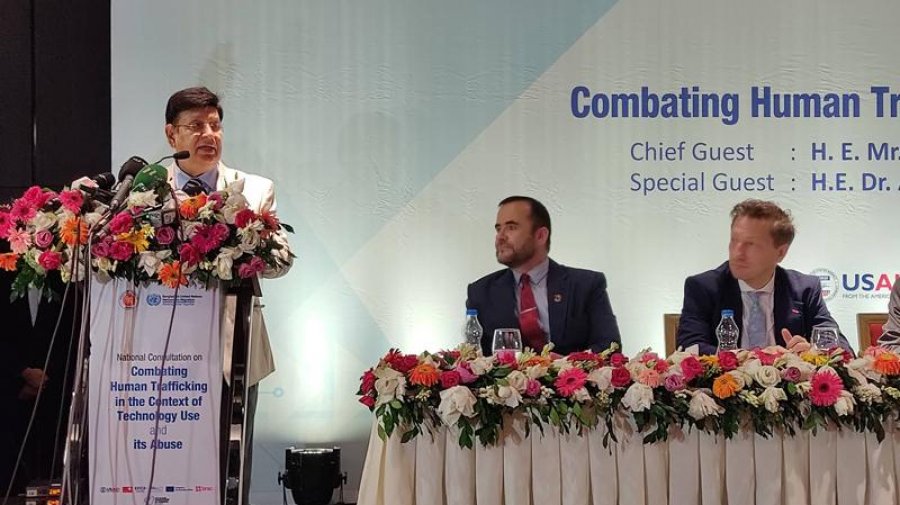 Mentioning that human traffickers are able to do more damage through information technology, AK Abdul Momen said, 'Governments and stakeholders can prevent them with the help of technology. But we have to remember that human trafficking is a transnational crime and other countries' technology may be more advanced than ours; Human traffickers can take advantage of that. That is why international organizations must ensure that developing countries get the benefit of advanced technology.
Robert Chatterton Dixon, British High Commissioner to Bangladesh also agreed with the point mentioned by the Foreign Minister. He said, "Like traffickers are doing their work using technology, we too can use technology to speak out against it." Stating that the number of trafficking has increased due to the epidemic, he said that trafficking is one of the problems in Bangladesh like other countries. We are helping and advising Bangladesh in various ways to prevent trafficking. We have trained around 30,000 women in anti-trafficking.
Switzerland's ambassador to Bangladesh, Nathalie Chuard, said that the Swiss government and the Bangladesh government have been working together for 12 years to prevent human trafficking. Trafficking has increased due to social media. But we can also use social media to prevent trafficking.
Abdus Sattar Isov, head of IOM's Bangladesh Migration Representative, said that since the break of Covid-19 pandemic, human traffickers have become more active in trafficking using technology. We also need to work on anti-trafficking using technology. But it cannot be done alone, it is possible to prevent human trafficking through collective efforts only.
Mentioning that human traffickers are able to do more damage through information technology, AK Abdul Momen said, 'Governments and stakeholders can prevent them with the help of technology. But we have to remember that human trafficking is a transnational crime and other countries' technology may be more advanced than ours; Human traffickers can take advantage of that. That is why international organizations must ensure that developing countries get the benefit of advanced technology.
Robert Chatterton Dixon, British High Commissioner to Bangladesh also agreed with the point mentioned by the Foreign Minister. He said, "Like traffickers are doing their work using technology, we too can use technology to speak out against it." Stating that the number of trafficking has increased due to the epidemic, he said that trafficking is one of the problems in Bangladesh like other countries. We are helping and advising Bangladesh in various ways to prevent trafficking. We have trained around 30,000 women in anti-trafficking.
Switzerland's ambassador to Bangladesh, Nathalie Chuard, said that the Swiss government and the Bangladesh government have been working together for 12 years to prevent human trafficking. Trafficking has increased due to social media. But we can also use social media to prevent trafficking.
Abdus Sattar Isov, head of IOM's Bangladesh Migration Representative, said that since the break of Covid-19 pandemic, human traffickers have become more active in trafficking using technology. We also need to work on anti-trafficking using technology. But it cannot be done alone, it is possible to prevent human trafficking through collective efforts only.
 Home Minister Asaduzzaman Khan Kamal pointed out that the government is showing a zero tolerance policy in the fight against human trafficking. He said, 'Celebrating this day for the first time means how committed the government is to prevent human trafficking. The government follows a zero tolerance policy on heinous crimes like human trafficking. The government has formulated laws and policies to prevent this crime.'
Senior Secretary of the Public Security Department of the Ministry of Home Affairs. Akhtar Hossain said that Bangladesh is earning foreign currency as the seventh country. Technology makes it easy for criminals to find people for trafficking, we should also use technology to work against them. However, the government is continuing various activities against human trafficking.
The secretary of the Ministry of Expatriate Welfare and Foreign Employment also spoke at the event. Ahmed Munirus Salehin, Acting Deputy Chief of Mission of the US Embassy Scott Brandon, Acting Charge de Affairs of the European Union Delegation Jeremy Aparitso, United Nations Resident Coordinator in Bangladesh Jean Lewis and others.
Home Minister Asaduzzaman Khan Kamal pointed out that the government is showing a zero tolerance policy in the fight against human trafficking. He said, 'Celebrating this day for the first time means how committed the government is to prevent human trafficking. The government follows a zero tolerance policy on heinous crimes like human trafficking. The government has formulated laws and policies to prevent this crime.'
Senior Secretary of the Public Security Department of the Ministry of Home Affairs. Akhtar Hossain said that Bangladesh is earning foreign currency as the seventh country. Technology makes it easy for criminals to find people for trafficking, we should also use technology to work against them. However, the government is continuing various activities against human trafficking.
The secretary of the Ministry of Expatriate Welfare and Foreign Employment also spoke at the event. Ahmed Munirus Salehin, Acting Deputy Chief of Mission of the US Embassy Scott Brandon, Acting Charge de Affairs of the European Union Delegation Jeremy Aparitso, United Nations Resident Coordinator in Bangladesh Jean Lewis and others.
Mentioning that human traffickers are able to do more damage through information technology, AK Abdul Momen said, 'Governments and stakeholders can prevent them with the help of technology. But we have to remember that human trafficking is a transnational crime and other countries' technology may be more advanced than ours; Human traffickers can take advantage of that. That is why international organizations must ensure that developing countries get the benefit of advanced technology.
Robert Chatterton Dixon, British High Commissioner to Bangladesh also agreed with the point mentioned by the Foreign Minister. He said, "Like traffickers are doing their work using technology, we too can use technology to speak out against it." Stating that the number of trafficking has increased due to the epidemic, he said that trafficking is one of the problems in Bangladesh like other countries. We are helping and advising Bangladesh in various ways to prevent trafficking. We have trained around 30,000 women in anti-trafficking.
Switzerland's ambassador to Bangladesh, Nathalie Chuard, said that the Swiss government and the Bangladesh government have been working together for 12 years to prevent human trafficking. Trafficking has increased due to social media. But we can also use social media to prevent trafficking.
Abdus Sattar Isov, head of IOM's Bangladesh Migration Representative, said that since the break of Covid-19 pandemic, human traffickers have become more active in trafficking using technology. We also need to work on anti-trafficking using technology. But it cannot be done alone, it is possible to prevent human trafficking through collective efforts only.
Home Minister Asaduzzaman Khan Kamal pointed out that the government is showing a zero tolerance policy in the fight against human trafficking. He said, 'Celebrating this day for the first time means how committed the government is to prevent human trafficking. The government follows a zero tolerance policy on heinous crimes like human trafficking. The government has formulated laws and policies to prevent this crime.'
Senior Secretary of the Public Security Department of the Ministry of Home Affairs. Akhtar Hossain said that Bangladesh is earning foreign currency as the seventh country. Technology makes it easy for criminals to find people for trafficking, we should also use technology to work against them. However, the government is continuing various activities against human trafficking.
The secretary of the Ministry of Expatriate Welfare and Foreign Employment also spoke at the event. Ahmed Munirus Salehin, Acting Deputy Chief of Mission of the US Embassy Scott Brandon, Acting Charge de Affairs of the European Union Delegation Jeremy Aparitso, United Nations Resident Coordinator in Bangladesh Jean Lewis and others.









